
How to Choose the Right LDPE Packaging Bag for 25 kg & 50 kg Industrial Products
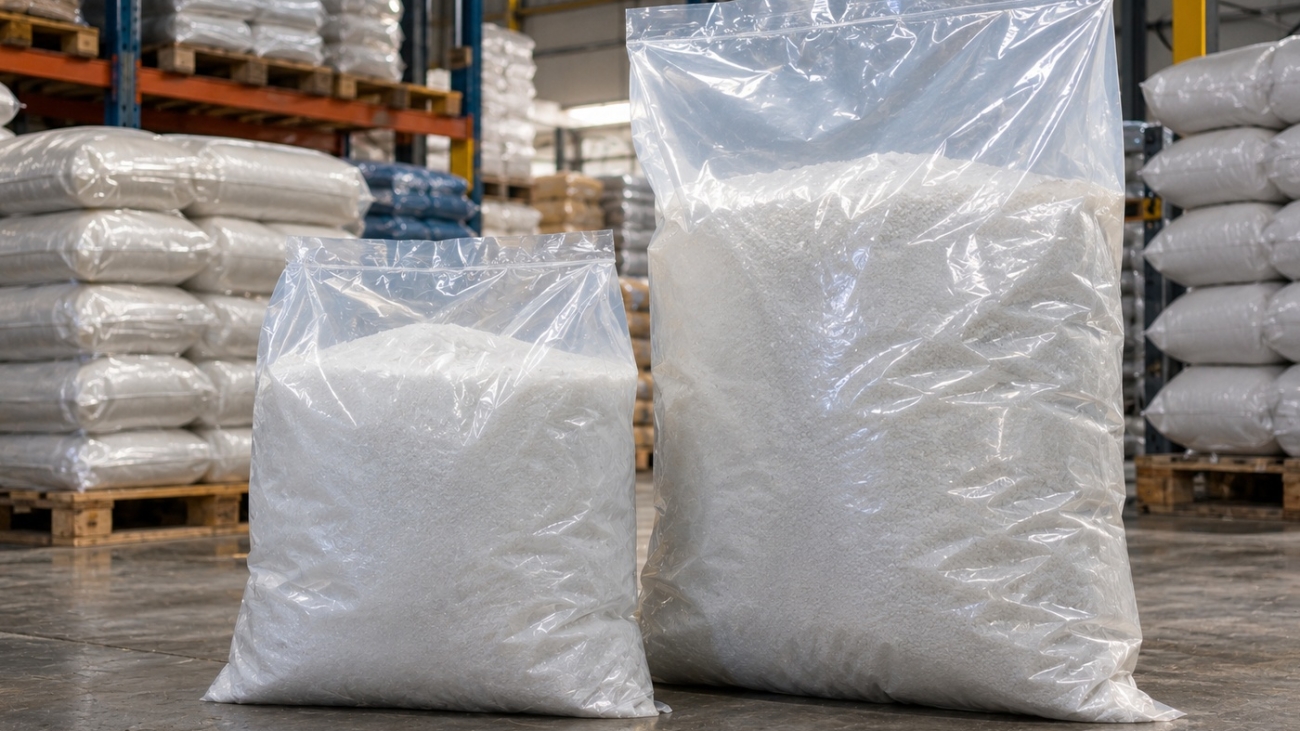
Choosing the right packaging bag for a 25 kg or 50 kg industrial product involves more than selecting the right size. Product characteristics, filling method, film thickness, bag construction, palletisation and transportation all influence the right packaging specification.
For manufacturers handling chemicals, minerals, polymers, food ingredients, agricultural products and other industrial materials, the packaging needs to withstand the complete journey from filling to final delivery.
This guide explains the key factors to consider when selecting LDPE packaging bags for 25 kg and 50 kg products.
Why the Right LDPE Bag Matters
Industrial packaging has to do more than simply contain a product.
A suitable bag should be able to handle:
- Filling and sealing
- Manual or mechanical handling
- Stacking and palletisation
- Warehouse storage
- Transportation
- Loading and unloading
An unsuitable bag can result in tearing, leakage, poor pallet stability or product contamination.
Therefore, the lowest-priced bag is not necessarily the most economical option. The better approach is to select a bag based on the product and its complete handling environment.
1. Start With the Product
The first question should always be:
What are you packing?
A 25 kg chemical powder can have very different packaging requirements from a 25 kg polymer granule or food ingredient.
Consider:
- Powder or granule
- Bulk density
- Particle size
- Abrasiveness
- Moisture sensitivity
- Flow characteristics
- Product temperature during filling
These factors influence the required bag construction, dimensions and film specification.
For example, products with sharp or abrasive particles may require a different film specification from fine powders.
2. Choose the Right Bag Construction
For 25 kg and 50 kg industrial products, different LDPE bag constructions can serve different purposes.
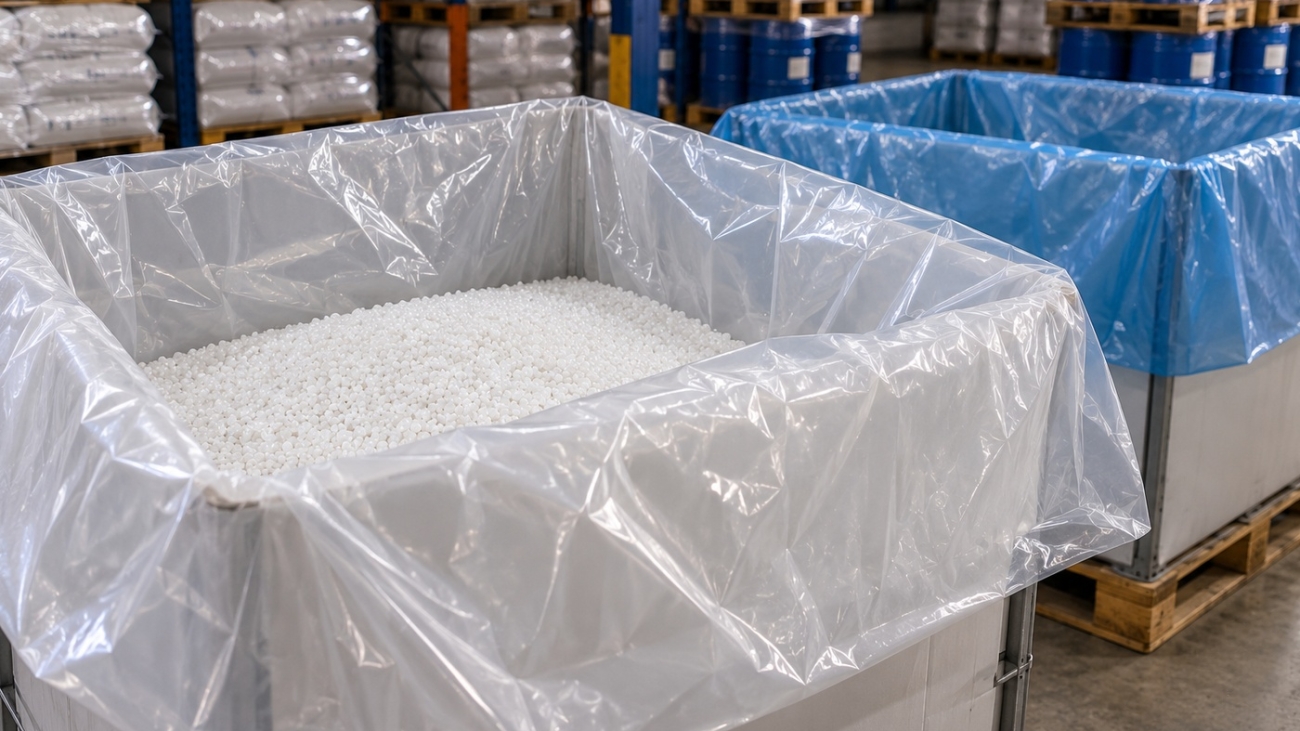
LDPE Liner Bags
LDPE liner bags are generally used as an internal polyethylene layer inside another outer package.
They can provide:
- Product containment
- Dust protection
- Additional moisture protection
- A clean internal packaging surface
They are commonly considered for chemicals, food ingredients, pharmaceutical raw materials, powders and granules.
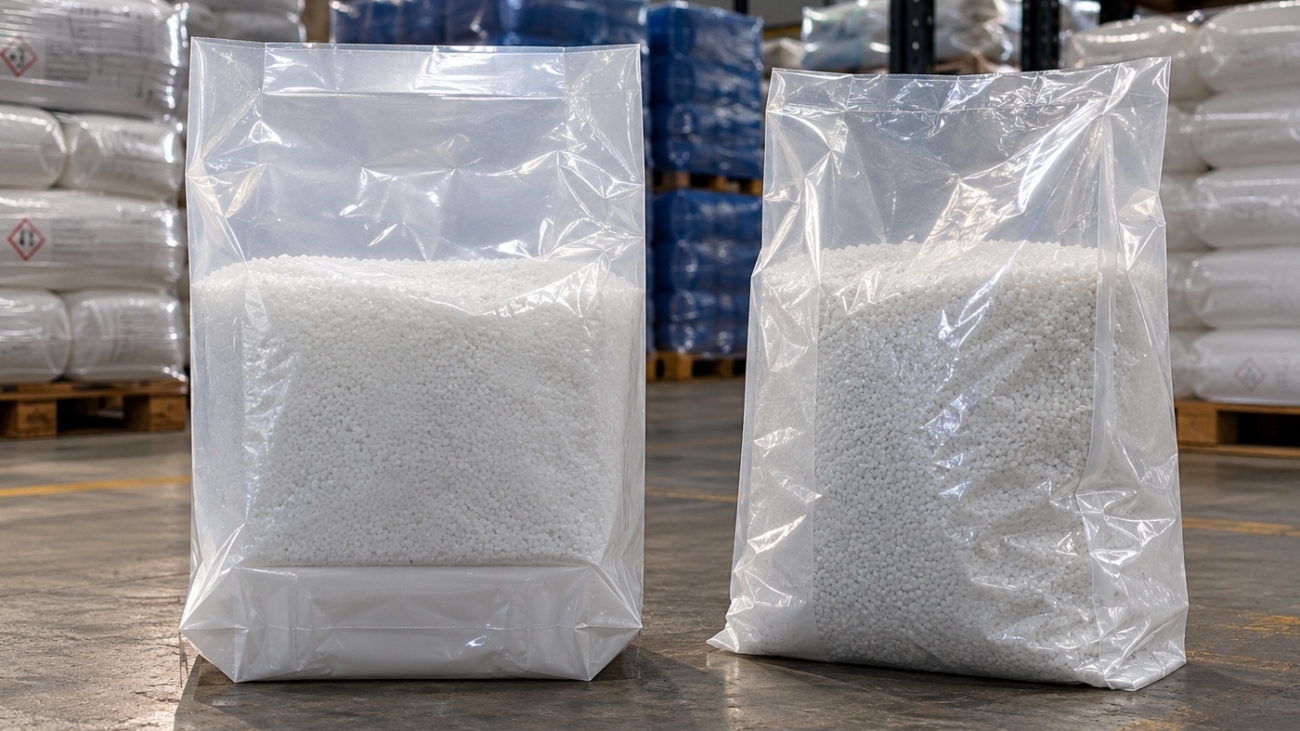
Gusseted LDPE Bags
Gusseted bags have folded sides that allow the bag to expand when filled.
They can be useful where the customer requires:
- Greater volume
- A specific filled shape
- Better fitting within an outer package
- Practical palletisation
LDPE Block Bottom Bags
Block bottom bags are designed to provide a more defined and stable bottom when filled.
They are particularly useful for industrial products that are:
- Palletised
- Stacked
- Mechanically handled
- Transported over long distances
Anti-Skid LDPE Bags
For palletised products, surface grip can be important.
Anti-skid LDPE bags are designed to help reduce movement between filled bags during stacking and transportation.
This can be particularly useful for 25 kg and 50 kg chemical, mineral and industrial products.
3. Don't Choose Film Thickness by Weight Alone
One of the common mistakes when buying industrial bags is assuming that a 50 kg product automatically requires a particular film thickness.
It doesn’t.
The required film specification depends on the actual application.
Important factors include:
Product: Is it powder, granule or an abrasive material?
Drop height: How far does the filled bag fall during filling?
Handling: Is it handled manually or mechanically?
Palletisation: How many bags are stacked?
Transportation: Will it travel locally or internationally?
Storage: How long will the product remain packed?
The correct film specification should therefore be determined by the complete packaging cycle, rather than weight alone.
4. Consider Your Filling Process
Your packaging equipment also affects the type of bag you should use.
For example, a manufacturer filling bags manually may require a different format from a factory operating an automated packaging line.
Ask:
- Is filling manual or automatic?
- Does the bag need to remain open during filling?
- Is the bag sealed separately?
- Is an FFS machine being used?
For high-volume automated operations, FFS rolls can be an alternative to pre-made bags.
With Form-Fill-Seal packaging, the film is formed, filled and sealed as part of an automated process.
This can be particularly useful for manufacturers packaging large volumes of consistent 25 kg or 50 kg products.
5. Think About Palletisation
A bag shouldn’t be evaluated only when it is empty.
Think about what happens after filling.
A typical industrial packaging journey may look like:
Filling → Sealing → Palletisation → Storage → Forklift Handling → Transportation → Customer Delivery
The filled bag needs to remain stable throughout this process.
Consider:
- Filled bag dimensions
- Surface friction
- Bags per layer
- Number of layers
- Pallet size
- Stretch wrapping
- Shrink wrapping
- Transportation conditions
For export shipments, these considerations become even more important because the product may experience extended handling and transportation.
6. When Should You Consider an Anti-Skid Bag?
If filled bags are shifting on pallets, an anti-skid surface can be worth considering.
Anti-skid LDPE bags can help improve stability where products are:
- Stacked several layers high
- Transported by truck
- Shipped in containers
- Frequently moved by forklifts
- Subjected to vibration during transportation
For manufacturers exporting 25 kg and 50 kg products, pallet stability can directly affect packaging performance during transit.
7. Does Your Product Need an LDPE Liner?
A liner is particularly useful when an additional internal polyethylene layer is required.
The basic construction can be:
Outer Bag
↓
LDPE Liner
↓
Product
This arrangement can provide additional containment and protection for certain products.
LDPE liners are commonly considered for:
- Chemical powders
- Granules
- Food ingredients
- Pharmaceutical raw materials
- Agricultural products
- Industrial materials
The liner should be specified according to the actual dimensions, filling process and application.
8. 25 kg or 50 kg — Which Should You Choose?
The choice isn’t simply about which bag costs less.
25 kg packaging may be suitable when:
- Manual handling is involved
- Smaller individual units are preferred
- The product is distributed in smaller quantities
- Lower individual lifting weight is desirable
50 kg packaging may be suitable when:
- Bulk handling is preferred
- Fewer bags per pallet are desirable
- The customer has suitable handling equipment
- The product is primarily supplied to industrial users
The right choice depends on your production, handling and distribution system.
9. What Should You Tell Your Packaging Supplier?
When requesting a quotation, don’t simply say:
“I need 50 kg LDPE bags.”
Give the manufacturer enough information to recommend the correct specification.
Ideally provide:
Product
- Product type
- Powder or granule
- Bulk density
- Moisture sensitivity
- Abrasiveness
Packaging
- 25 kg or 50 kg
- Bag dimensions
- Existing bag/sample
- Required construction
- Printing requirements
Filling
- Manual
- Automatic
- FFS
- Other filling system
Logistics
- Palletisation
- Number of bags per pallet
- Domestic or export
- Expected storage duration
If you already have an existing bag, sending a physical sample or specification sheet can significantly simplify the development process.
Quick Comparison
|
Requirement |
Suitable LDPE Packaging Option |
|
Internal polyethylene layer |
LDPE Liner Bag |
|
Additional side capacity |
Gusseted LDPE Bag |
|
Stable filled package |
Block Bottom Bag |
|
Improved pallet grip |
Anti-Skid LDPE Bag |
|
Automated bag production |
FFS Film Roll |
|
Heavy industrial handling |
Heavy-Duty LDPE Bag |
The final specification should always be based on the product and application.
Common Mistakes When Choosing Industrial LDPE Bags
Buying purely on price
A small saving per bag can become expensive if bags fail during filling or transportation.
Choosing thickness without considering the application
Film thickness should be based on actual handling and product requirements.
Ignoring pallet stability
A strong individual bag can still create an unstable pallet.
Treating every 25 kg product the same
Weight is only one factor. Product characteristics matter considerably.
Not providing an existing sample
An existing bag gives the manufacturer valuable information about dimensions, construction and performance requirements.
Choosing the Right LDPE Packaging Partner
For industrial packaging, the right supplier should be able to understand more than the bag dimensions.
They should understand:
Your product → Your filling process → Your handling → Your palletisation → Your transportation
At Arihant Rasayan, we manufacture a range of LDPE packaging solutions for industrial and bulk applications, including:
- LDPE Block Bottom Bags
- LDPE Open Mouth Gusseted Bags
- LDPE Anti-Skid Bags
- LDPE Liner Bags
- FFS Rolls
- Gusseted FFS Rolls
- LDPE Films
- Shrink Films
- Heavy-Duty Shrink Covers
- LDPE Pallet Covers
- VCI Bags and Films
Our manufacturing base in Vadodara, Gujarat enables us to work with customers requiring customised dimensions, film specifications and packaging formats.
Need a 25 kg or 50 kg LDPE Packaging Bag?
Send us your existing bag, product details, dimensions or packaging specification and our team can evaluate the requirement.
Request a Quote | Request a Sample | Send Your Specification